Postado em: 3 September, 2025
Meeting the youth leadership marks the second day of the “Learning Experience on Racial Equity 2030.”
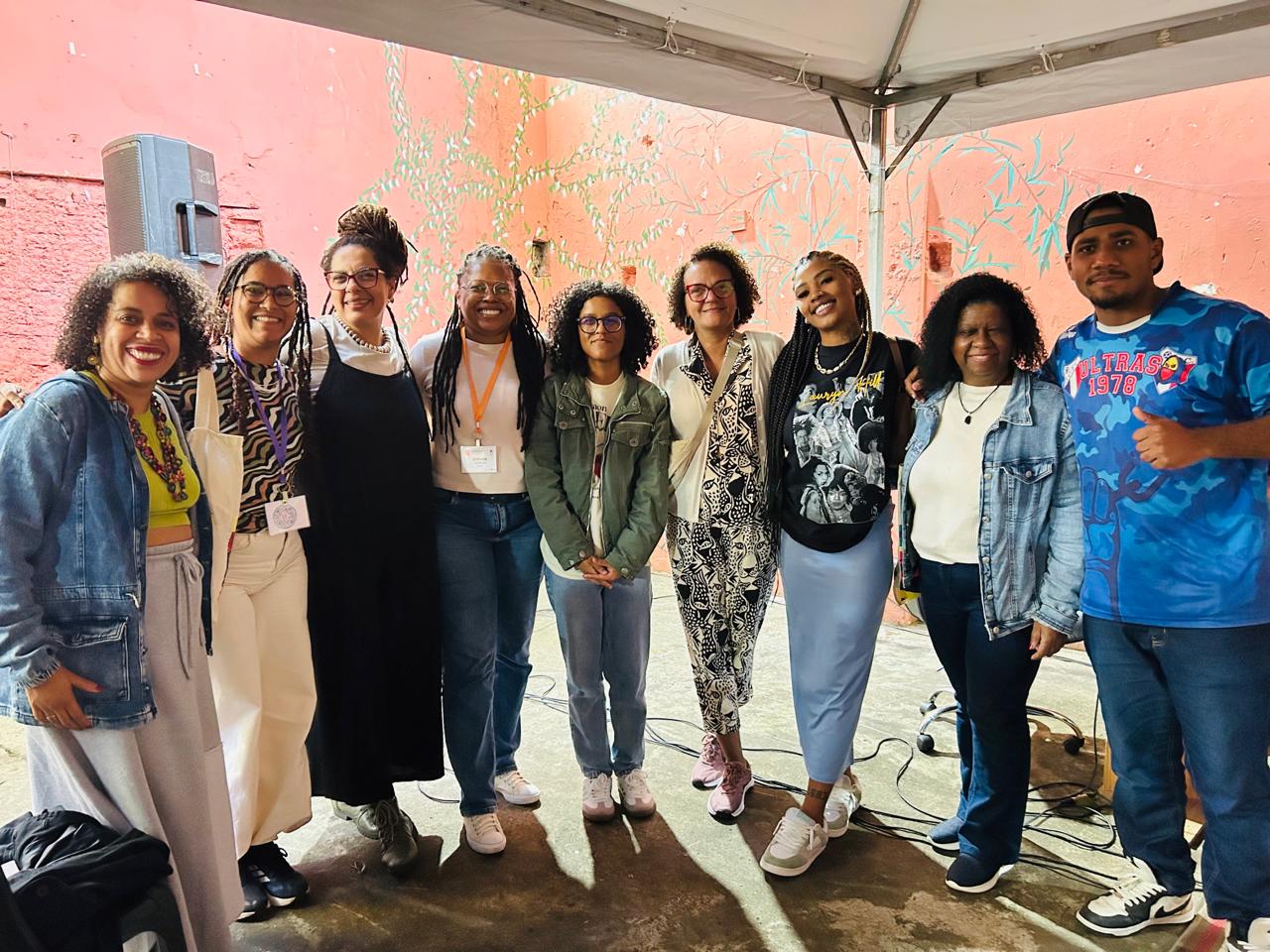
At the Ocupação 9 de Julho (July 9th Occupation), a building occupation of MSTC (a movement that fights for the rights to dignified housing), the event’s participants had the opportunity to engage with UNEafro Brazil’s youth leadership’s inspiring stories.
As previously mentioned, the conference’s opening days were filled with educational and inspiring activities.
The second day of the agenda began with a guided tour of the neighborhood Liberdade (Liberty), in downtown São Paulo. During the tour, the participants learned about the history of one of the main regions of the capital of the state of São Paulo. The next stop was the 9th of July Occupation, where the attendees met the youth and learned firsthand about the experiences of young leaders connected to UNEafro Brazil, an organization that is a part of the alliance with the SETA Project.
Historical and cultural meaning
Liberdade is currently known as a Japanese neighborhood, but has profound historical relevance for the Afro-Brazilian communities. This is because between the 18th and 19th centuries, it was a refuge for the black community, including formerly enslaved people. Consequently, in addition to being a place of refuge, it also served as a site of resistance and oppression for this population.
Continuing our tour, we then visited the Open Area of the Art Museum of São Paulo (MASP), where the attending guests could view the 9th of July Avenue from above.
Young leadership at the center
In the second half of the day, we focused on an inspiring conversation with youth associated with UNEafro Brazil. The discussion was comprised of Amanda Santos, an economics student and math teacher in a college entrance exam prep course at the Occupation; Stephany Lourenço, an undergraduate student in the School of Arts and Portuguese teacher in the college entrance exam prep course; and Malick Gomes, a member of “Ngungas”, an education project, supported by the SETA Project, which is designed for black boys.
To live means leaving, coming back, and sharing
Inspired by the excerpt “never go back to your hood with empty hands and an empty mind”, from the song “Levanta e Anda (Get up and Go) by the rapper Emicida, Amanda, and Stefany, a song dedicated to inspiring youth who, like them, seek change and transformation in life.
The young women, products of one of the 32 popular college entrance exam prep courses organized by UNEafro and replicated across Brazil, first became students, earning their long-awaited positons in higher education. Later, they returedn to become teachers at the very prep course where they had studied.
“Returning to the role of educator is a huge responsibility. Just a short while ago, I was on the other side getting this support. And to have this opportunity as a teacher, to keep my prep course and center going so that other people have their lives transformed is very gratifying”, says Amanda Santos.
For Stefany, a senior student in the School of Arts, the experience that she had during the educational development was fundamental in understanding its relevance in society. “I am a product of social movement, and this was how I understood the possibilities I had in the world, being a black woman from the periphery. Therefore, this role as a movement multiplier is important because of the transformation it has brought to my life. And I have the opportunity to transform other people’s lives as well”, states Stefany.
Malick Gomes, a member of “Ngungas”, still sees the lack of opportunities for youth in the periphery to have access to Higher Education. According to him, the need to contribute to the bills at home forced him to put his dreams on the back burner, leading him to drop out of school. “It is very common to see young people leave school early, before finishing their studies, working to help at home. My dream is that everyone can have the chance to finish their studies, to work with what they like, and to do what they love”, he emphasizes.