Postado em: 27 August, 2025
What saved me was the strength I received from the black movement” – SETA Project interviews Deputy Dandara Tonantzin
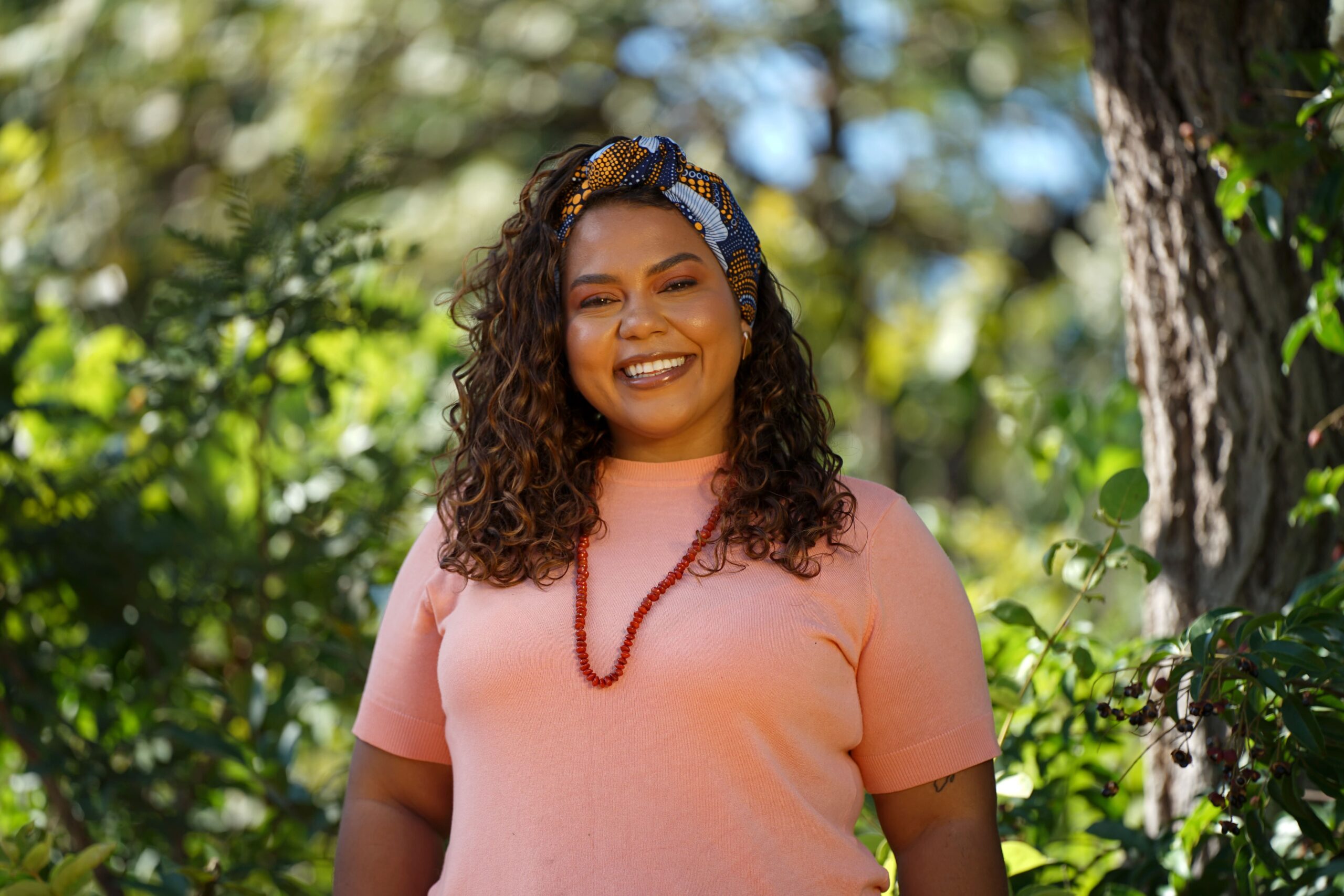
In an exclusive interview, the Parliament member speaks on her work in the area of antiracist education and the importance of the black movement.
Elected in 2022 by the Workers’ Party, in the state of Minas Gerais (PT-MG), the State Representative Dandara Tonantzin, has been working in the Chamber of Deputies for the full implementation of the Laws 10.639/03 and 11.645/08, which make teaching both Afro-Brazilian and Indigenous culture and history obligatory in the school curriculum. In addition to that, the member of the state legislative assembly has an important role in the inclusion of amendments geared towards antiracist education in the new National Education Plan (NEP).
In April of this year, the deputy represented the Black Caucus for the Chamber in the “UN’s Fourth Session of the Permanent Forum for People of African Descent”, where she was also a panelist in a discussion at an event held by the SETA Project which was happening concomitantly with the UN Session, “Anti-Racist Education and the Role of Public Policies: Pathways towards Racial Equity”, which occurred in New York. Dandara Tonantzin is a pedagogue and holds a Master’s degree in Education, in addition to her long history as an activist. Within the Chamber of Deputies, she is a member of the Education Committee and President of the standing subcommittee on Inclusive Education and Affirmative Action Policies. In an interview with the SETA Project, the parliament member spoke on her career in politics and the agendas that have defined it. Check out the interview below:
- When and how did the desire to be a member of parliament emerge?
Dandara: I wasn’t born with the desire to be a parliament member. The truth is that, for a long time, I didn’t even believe that this was possible. Growing up as a black girl from the periphery means growing up without references. However, since I was young, life has taken me to spaces of struggle. I began in the student movement, and I have always had something inside me that said: “This is where you need to be. This is where you can make a difference”. However, I still did not see myself as a woman in institutional politics. It seemed too distant.
In 2017 something happened that deeply impacted me. I had been subjected to a violent racist attack, and this crime was shelved by the prosecutor on the grounds that “the racism was all in my head”. Nevertheless, this was also a turning point. I strongly denounced the attack on social media, and the case reverberated throughout the nation, which ended up speeding up the idea of me running for office.
I finished my master’s degree and threw myself into the collective fighting project. I was elected the most voted councilwoman in Uberlândia in 2020, in the wake of the struggle against racism and fighting Bolsonaro’s negationist government during the pandemic. It was not only a victory for me. It was also a victory for our history, for our resistance movement, and for our ancestry. Because every time one of us blazes the trails, it opens the pathways so that others may do the same.
- How was your inclusion into the Chamber of Deputies?
Dandara: Do you know the feeling when we enter a place and sense the weight of its history on our shoulders? Well, that was how I felt on the first day in the Chamber of Deputies. I thought about the time when I was a young girl – the young girl who organized the student council, who held an occupation at the Dean’s Office, who would grab the microphone in protests, who had her turban snatched from her head because she dared to be exactly who she was. That girl is now a Federal Representative. I did not get into politics for vanity. I got into it because we also have the right to dream, to legislate, to transform. That moment was the beginning of a new era in our history because, now, Minas Gerais had a black woman from the periphery in the National Congress.
- And how is it to work for the advancement of antiracist education and supporting movements that seek the effective implementation of Law 10.639?
Dandara: Working towards antiracist education is not something that began during my tenure in office. It was a fight that was part of being the National Councillor of the Promotion of Racial Equality, in the National Racial Equality Council (CNPIR). There, I saw from my experiences how much public policies need to hear from those who are working in grassroots movements. It was during this period that I deepened my commitment to the application of Law 10.639 even more, together with the black movement.
For me, it is not only about the law – but rather about memory, reparations, and the right to the future. Fighting for the application of the law means having a dialogue with social movements that have been doing this work for decades, and ensuring they have the support, visibility, and resources they need. I defend the resources from the National Fund for Educational Development (FNDE), which are allocated to states and municipalities to execute the majority of the activities and programs in Primary Education, are linked to compliance with the laws 10.639/2003 and 11.645/2008. Today, more than 70% of the municipalities do not apply these laws. This needs to change.
- What motivated you to defend the agenda for antiracist education?
Dandara: My fight for antiracist education began at home. My mother taught me two things: that education is a right, and not a favor; and that to be black and to study are, in themselves, acts of resistance. However, I also learned early on that this education, in the manner that it was presented, was not made for us. I had never seen myself in a book. I had never heard of Zumbi, Dandara, Carolina Maria de Jesus, or Milton Santos in school. What saved me was the strength of the black movement. In Uberlândia, I had the privilege of being with amazing black women, such as Conceição Leal – a living reference in the fight for a form of education that respects our history and our humanity. Women like her opened up the pathways; they planted the seeds. I am the fruit of one of those seeds.
- Speaking of the Law, how do you evaluate the application of this policy in Brazilian education?
Dandara: The Law 10.639 is a historical achievement for the black movement; however, it is dealt with as if it were “optional”. How do you teach the history of the black people as if you were doing a favor, and not an obligation of the state? In many schools, it only shows up on symbolic dates, such as 20 November. Moreover, November 20th was not even considered a holiday. On a day-to-day basis, public schools often lack adequate training for teachers, suitable didactic materials, and the necessary political support. And the most severe: it lacks the comprehension that this law is an instrument to combat structural racism from the very foundation of society. Recognizing both the historical and current struggles of the black population is fundamental for us to advance towards a truly inclusive democracy, for all.
- In your expert opinion, what impedes it from being effectively implemented?
Dandara: It is because of institutional racism. And it, institutional racism, is the naturalization of black people’s absence: in building the curriculum, in the classrooms, and in pedagogic decision-making. There is also a lack of investment. Teachers are not prepared to teach the content. They do not get support to do the necessary work. And they do not have access to materials that value Afro-Brazilian culture. In addition, there is ideological pushback from conservative sectors of society that attempt to sabotage any form of progress in critical and inclusive education. In other words, this can be summed up in the lack of budgetary priority and the advance of denialism, which has delayed the urgent transformation.
- Does the absence of Afro-Brazilian history and culture in education hinder the struggle against racism in our country?
Dandara: When we erase the history of a given group of people, we also erase their right to see themselves, to have pride, to take up spaces with dignity. This affects their self-esteem, identity, and it reinforces that racism is a structural issue. At the same time, white children are raised without understanding the impacts of slavery, without reflecting on inherited privileges, and without developing empathy for others. In other words, the silence regarding our history feeds prejudice every single day.
- How can the new National Education Plan be a tool for the real struggle against racism?
Dandara: The new PNE, National Education Plan, needs to place antiracist education at the center of its goals and strategies. This means including clear indicators for the implementation of Law 10.639, to prescribe continued training for educators, to incentivize research and the production of content on Black history, and to guarantee that there is a budget for this. We can no longer accept a national plan that treats our stance on race as a peripheral issue. Our work will be to ensure that these plans are inseparable from the concepts of truly antiracist education, as a pre-requisite, so that the country finally overcomes a civilization deficit whose origin is none other than the blight of 300 years of slavery.