Postado em: 18 March, 2026
A Global Perspective on Anti-Racist Education: A Case Study on Quilombola Education in Alto Alegre (Ceará, Brazil)
Our global research and advocacy mission (Outcome 6), part of a collaboration between the University of Bristol, ActionAid International, and the SETA Project, a collective of anti-racist initiatives in Brazil, has the fundamental purpose of promoting anti-racist education in schools across the world. The research aims to centre race, racism, and anti-racist education within national (in the Brazilian public education system) and international policy and practice frameworks.
As part of this global work, we recognise the need to go beyond theory to focus on practical initiatives that are making a difference in state (public) schools and communities. But how is an anti-racist education implemented? To date, we have identified 130 initiatives through our research and have conducted interviews with 27 individuals and collectives involved with anti-racist education across 11 countries: Brazil, Australia, Bangladesh, India, Lebanon, Mexico, Aotearoa-New Zealand, Senegal, South Africa, the United Kingdom, and the United States.
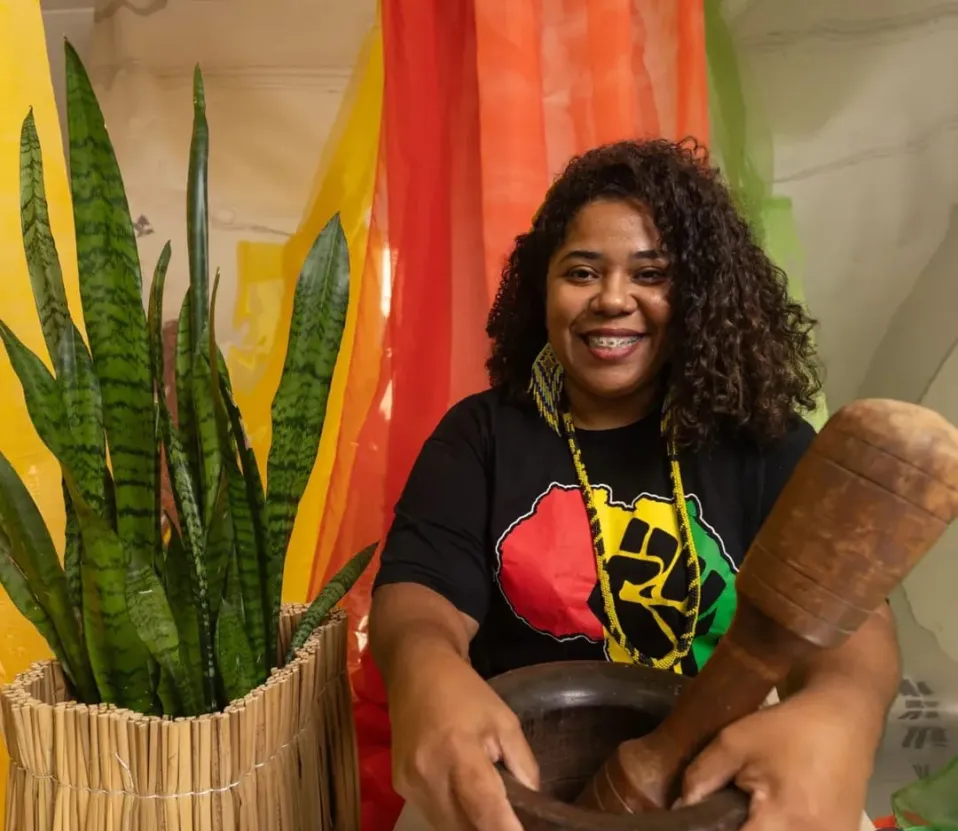
In addition to the interviews, and to better understand how education professionals combat racism in their schools, classrooms, and communities, we are conducting case studies to delve deeply into specific practices, in order to learn from and capture the anti-racist practices happening across the globe. Case studies not only offer the possibility to explore what is happening, but also the why and the how. In Brazil, we conducted a case study focusing on Quilombola School Education as a practice of anti-racist education. The case study, entitled “Pedagogy of the Quilombo: An Education Beyond Walls” (2025), was coordinated by Quilombola teacher, Marleide Nascimento, in partnership with CONAQ and the SETA Project, in the Quilombo of Alto Alegre, in the municipality of Horizonte, Ceará. As part of the case study, training courses were offered for educators, aiming to promote an anti-racist education by amplifying Quilombola knowledge and offering territorialised and contracolonial pedagogical practices.
In the following interview, Marleide Nascimento shares further details of the case study, conducted with the support of the Horizonte Department of Education. The interview also aims to contextualise the importance of Quilombola education as an inspiring anti-racist practice. We believe that Quilombola School Education is a powerful example that teaches us how we can collectively build a more equitable and just future for all students.
Dr. Jáfia Naftali Câmara
Interview
- Marleide, tell us a little more about yourself, Conaq, and your involvement with Quilombola education.
I am a Quilombola, a teacher, cotista[1], the daughter of farmers, who has always seen education as a means of changing the reality of their lives. I am a writer, poet, storyteller, anti-racist educator, pedagogue, master in Humanities, and activist in the Quilombola movement in Ceará and nationally.
I was born in the Quilombola community of Alto Alegre, in the municipality of Horizonte, in the metropolitan region of Fortaleza. I grew up in an environment marked by ancestrality and community life, and I had a difficult childhood: at the age of 12, I suffered violence, was expelled from home and sent to work and live with a family in the capital [Fortaleza], but with one fundamental condition: that I be able to continue studying. I was awarded a Prouni scholarship to study Marketing, and I completed my studies even though I sometimes had to take my young son to class with me.
Professional training and practice
I later enrolled in education, through a specific call for applications that was launched as a result of the struggles of the Quilombola movement in Ceará with UNILAB, and I studied for a Master’s degree in Humanities at UNILAB. I am currently a teacher in the public school system in Fortaleza, I was the coordinator of a Quilombo Social Assistance Reference Centre (CRAS) and was the school principal of a Quilombola school in my territory where I developed Quilombola school education. I worked with the movement on various public policies focused on the specificities of the Quilombos, which led me to be nominated to represent them since May 2023, I have been a member of the National Commission for Ethnic-Racial Relations Education and for the Teaching of Afro-Brazilian and African History and Culture (Cadara), of the Ministry of Education, representing the Quilombos in Brazil and helping to create strategies for contextualised and inclusive education. I am also part of the National Collective for Quilombo School Education, as well as the State Education Forum of Ceará.
- In what ways does Quilombola education contribute to reinforcing Black identity and a sense of belonging among children and young people?
Quilombola education is not just a way of bringing content into the school. It is, above all, an act of resistance and reaffirmation of who we are. When a Quilombola child enters a classroom and recognises themselves in the books, stories, songs, symbols and educational practices, they understand that their origins are not a problem, but rather an ancestral strength. For a long time, we, Black people and Quilombolas, were taught to see ourselves through the eyes of others, the eyes of denial. Quilombola education does the opposite: it values our memories, territories, and knowledge, and places our ancestors as subjects of knowledge. This generates pride, strengthens belonging, and prevents our children from growing up believing that they need to deny their identity in order to be accepted. Furthermore, it builds a bridge between traditional knowledge and academic knowledge, showing that learning is not only found in books, but also in oral tradition, in the body, in collective work, in caring for the land, and in the stories told by elders. This boosts the self-esteem of our children and young people, because they see that what their families and communities teach them also has value.
Therefore, Quilombola education is a political and pedagogical tool for forming critical individuals who are aware of their roots and capable of confronting racism with pride in their history. It is a way to ensure that our children not only attend school, but that school is also transformed by them.
- What motivated the choice of the Alto Alegre Quilombo (in Ceará) as a case study for this project?
Firstly, because it is my home territory. I know the schools and the early childhood education centres, and I have contributed directly to the consolidation of this political and pedagogical project. Secondly, because of the relevance it would bring to my ongoing doctoral research.
- Which elements of the Alto Alegre experience do you consider most inspiring for public school systems that wish to implement an anti-racist education?
There are several. Among them are the historical recognition that the school system gives to the contribution of the Quilombola community to education, the recognition of the elders, the struggle of the social movement, and the partnership that exists between them.
- How can schools or educational spaces better prepare for the experience and strengthening of ethnic-racial education?
By focusing on teacher training and the training of all professionals who work in and for the school. And by bringing Black and Quilombola communities closer to the school system.
- How does the existence of Laws 10,639 and 11,645 impact the classroom experience?
Laws 10,639/2003 and 11,645/2008 are historic achievements of the Black and Indigenous movements. For me, they represent an opportunity to transform the school into a truly plural space, where our history is no longer told solely from a colonial perspective, but rather through the lens of the peoples who built this country. In the classroom, the presence of these laws creates space for Black, Quilombola, and Indigenous children to see themselves as subjects of history. When a student sees the contribution of Africans, Quilombos, and Indigenous cultures in the curriculum, they understand that their identity has value, that their people have left fundamental marks on science, art, politics, and social life. This reinforces self-esteem and a sense of belonging.
But I also always say: the law alone does not change reality. It is a landmark, but it needs to be effectively implemented. Continuous teacher training, the production of contextualised teaching materials, and political will are necessary for the curriculum to truly incorporate these histories. Often, I still see the law treated as something to be remembered only in November or on commemorative dates. That is not enough.
When the law is put into practice seriously, the impact is enormous: students learn to see Brazil through its diversity, and not just through a single narrative. And this does not only benefit Black and Indigenous students, but society as a whole, because it combats stereotypes, confronts racism, and teaches us to coexist with respect for differences.
In summary: these laws are a tool for historical justice. They remind us that the classroom is also a territory of struggle, and that education has the power to rescue memories, strengthen identities, and pave the way for a more egalitarian future. And for this, we now have another struggle, which is the implementation of the National Policy for Quilombola Education (PNEERQ).
- What role does the SETA Project play in supporting and giving visibility to practices like those developed by the Quilombola community of Alto Alegre?
The SETA Project has been a partner that I see as a possibility to help us give shape and visibility to what already exists within the territory, on the ground in the schools, in the Department of Education, regarding ethnic-racial and Quilombola education. We, in Alto Alegre, have always had our cultural practices, our own way of educating and resisting. But often these actions are restricted to the territory, rendered invisible by the public authorities or by society in general. SETA comes precisely to enhance what is ours, recognising that the Quilombola community does not need someone to speak for it, but rather needs spaces for its voice to be heard.
With the project’s support, we have been able to record, disseminate, and strengthen experiences born from the territory: conversation circles, literary production, Quilombola education, the oral memory of the elders. This expands our network, connecting the Quilombo to other schools, universities, institutions, and social movements. It is a way of telling the world: “We exist, we produce knowledge, and we have much to teach.”
The most important thing is that SETA does not arrive imposing ready-made models. They have respected the community’s autonomy and recognise the value of our ancestry as a source of knowledge. Thus, they have contributed to Alto Alegre not being seen as just a point on the map, but as a living territory that educates, creates, dreams, and resists.
- Which aspects of the Quilombola education practice in Alto Alegre could influence or transform debates on anti-racist education in our national context?
When I see these initiatives in Horizonte, the Quilombola school, the pedagogical agenda, the alternative embroidery with technology, the visits that bring lives closer, the racial nucleus in the territory, and the ‘no racism award’, I perceive that we are jointly paving the way for the true meaning of anti-racist education. Because it is not sustained by empty discourse: it is born in the community, in living traditions, in institutional recognition, and in collective empowerment. And that is exactly what can inspire national debates: an education that is rooted in ancestrality, technological, participatory, and transformative.
The aspects of Quilombola education practice in Alto Alegre that can inspire and transform debates about anti-racist education at a national level are rooted in ancestrality, community pedagogy, and the integrative perspective we have built, with the right partnerships and institutional support.
Here are some projects:
1. Ampliando Horizonte (Broadening Horizons) Project
In the City of Horizonte’s “Amplifying Horizons” (Ampliando Horizontes), teachers and students undertake field trips and visits to the Quilombola community of Alto Alegre. This creates a real connection with the culture, history, and unique identity, strengthening the understanding of education as living interculturality, not just theoretical content. In 2023, 233 teachers and 663 students were reached by this initiative from the Municipal Government of Horizonte. This experience can serve as a pedagogical reference, showing that changing perceptions happens through concrete experiences with traditional communities.
2. Art as Resistance and Symbolic Valorisation
The “Embroidering Resistance Collective” (Coletivo Bordando Resistência), led by women from Alto Alegre, was internationally awarded by the International Association of Educating Cities through the 2022 Educating Cities Award. Furthermore, the “Embroidering Memories” project (Bordando Memórias) integrates embroidery with digital technology, promoting memory, identity, and digital inclusion. These projects show how anti-racist education can be aesthetic, technological, and symbolic, while simultaneously promoting the empowerment of Black women, the reclaiming of knowledge, and cultural production as a bridge to broader dialogues.
3. Infrastructure and Institutional Innovation
On August 18, 2025, Horizonte inaugurated the first full-time state Quilombola school in Ceará, equipped with laboratories, a library, an auditorium, a covered sports court, and accessibility features. This school represents a public policy that recognises the legitimacy of formal Quilombola education, capable of transforming the very structure of the school into a space of racial justice and inclusion.
4. The Afro-Quilombola Agenda as an Anti-Racist Didactic Resource
The municipal school system of Horizonte developed the “Afro-Quilombola Agenda,” a pedagogical tool that highlights dates, personalities, and cultural aspects, with QR Codes that lead to films, games, booklets, and videos. This facilitates teacher planning and the cross-curricular integration of the theme across different subjects. In the national context, this symbolic and educational technology can be replicated as an accessible and effective anti-racist practice.
5. Centre for Racial Equality and Anti-Racism Certification
Horizonte decentralised the Nucleus for the Promotion of Racial Equality (NUPPIR) into the Quilombola territory, strengthening community participation in the construction of local policies. Furthermore, it received the Racism-Free Municipality Award, a recognition of its consistent and articulated institutional action on the racial agenda. This model shows that it is possible to centre Quilombola voices in decision-making and implement actions that guarantee the effectiveness of anti-racist laws.