Postado em: 11 May, 2026
An event celebrates the end of the Educating Territory course in the city of Rio de Janeiro
In partnership with SETA, the Educating Territory course trained over 1.200 professionals in education
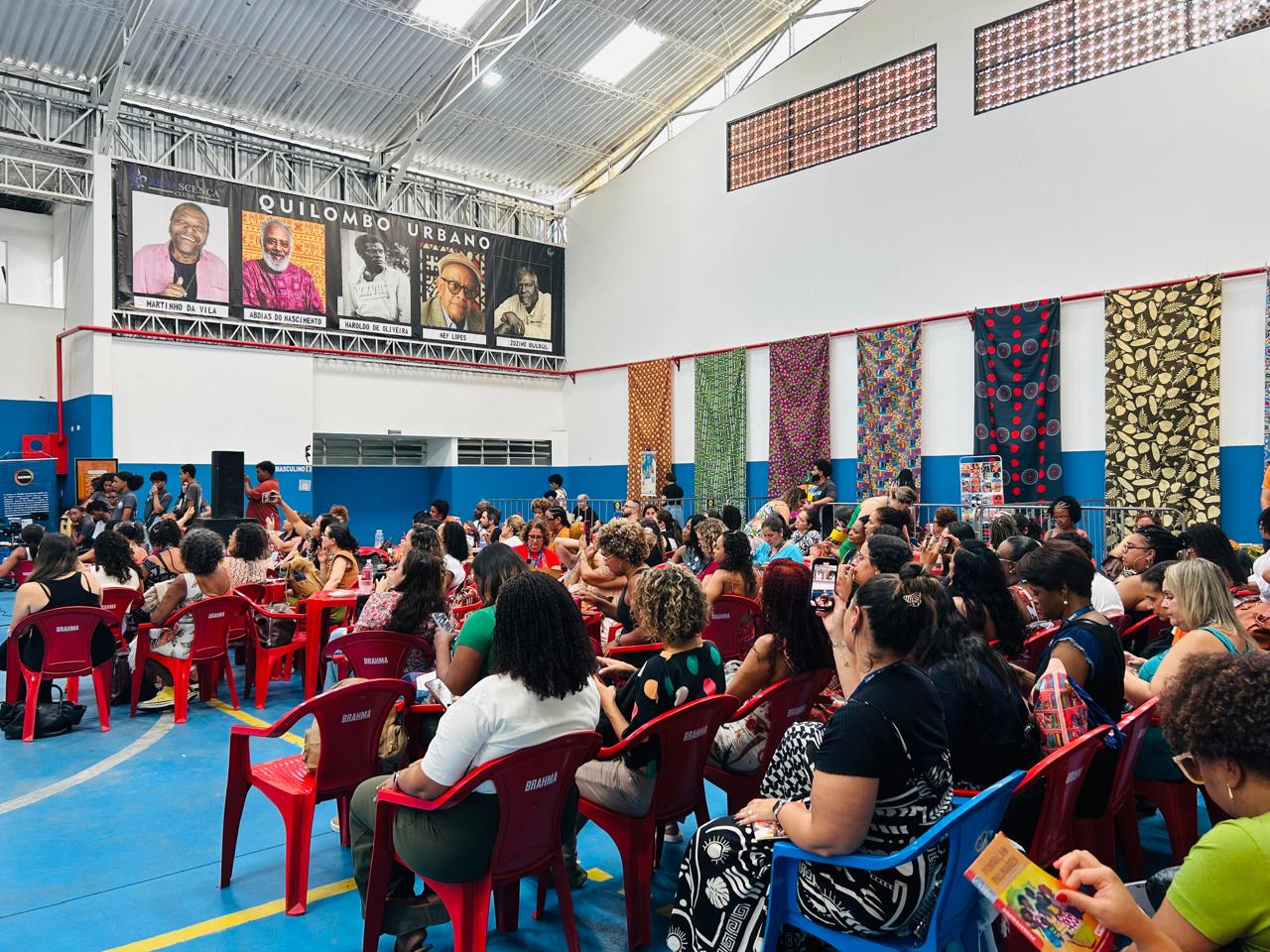
On 3 December, the long-established Clube Renasença (Renaissance Club) in Andaraí, a neighborhood in the north zone of Rio de Janeiro, was the venue for the closing ceremonies for the activities of the Educating Territories course, promoted by Ethnic-Racial Relations Management (GERER), from the Municipal Secretariat of Education of Rio de Janeiro, in partnership with the SETA Project.
The event mainly gathered teachers, school administration staff, and representatives from the Municipal Secretariat of Education of Rio de Janeiro (SME- RJ), and the SETA Project, represented by Maria Correa and Luciana Ribeiro, Liaison Consultant and Specialist in the Education Initiative, respectively. Caroline Silva also participated, a specialist in Education and Childhood at the SETA Project.
The party celebrated an important moment of recognition and appreciation for the educators who, throughout the year, participated in the training course, which was geared towards promoting racial equity in education, and made tools available to build pedagogic practices aligned with racial equity and the recognition of the Carioca Curriculum, an educational roadmap for the city of Rio de Janeiro, as a tool to fight racism and promote inclusion.
“This is a course that involves training teachers, supplying the technical planning to implement the laws 10.630 and 11.645, which directly affect schools. In numbers, we are the largest community in Latin America, with only 1.557 schools. This program must exist because the teachers’ requirements aren’t merely to attend the training course, return to the school, and do their jobs. These educators are also peer educators, multipliers. For this reason, everything that these people learn in the course becomes material for their course of action in the school, uniting partners, the administration, the community, and, consequently, improving and more efficiently impacting our students”, says Joana Oscar, a Coordinator at GERER.
Climate glossary from the perspective of children and teenagers
The meeting symbolized the success of the partnership in building an educational ecosystem committed to social justice, one that trains nearly 1.200 education professionals in the municipality of Rio de Janeiro. Over a thousand students directly benefit from the project.
For Karoline Santos, a specialist in Education at the SETA Project, the initiative with GERER represents a success story regarding coordination with the secretariats of education. “From this collaboration, which has lasted since the very first year of the project, we have had the opportunity to develop an action plan that dialogues with the network’s needs, aligned with tools for racial equity which we have created in the SETA coalition”, says the professional.
In the afternoon of the closing ceremonies for the Educating Territories course, there were cultural presentations, one of which was the Manoel Congo Popular Orchestra, from the Herbert Moses Municipal School, in the Jardim América neighborhood. There was also the distribution of the document “Little but Valuable Knowledge: A Climate Glossary from the perspective of children and adolescents”, designed by Action Aid, which gathered reports and charts of 350 children and adolescents, between the ages of 7 and 17 years old, who live in the territories affected by environmental racism.
Selecting Clube Renascença, a historical space for black culture in Rio de Janeiro, reinforced the symbolism of the celebration, highlighting the importance of recognizing and appreciating the knowledge and territories that drive struggles for equity in teaching.