Postado em: 19 May, 2026
Carolina Maria de Jesus, the writer’s daughter, shares her thoughts in the interview with SETA
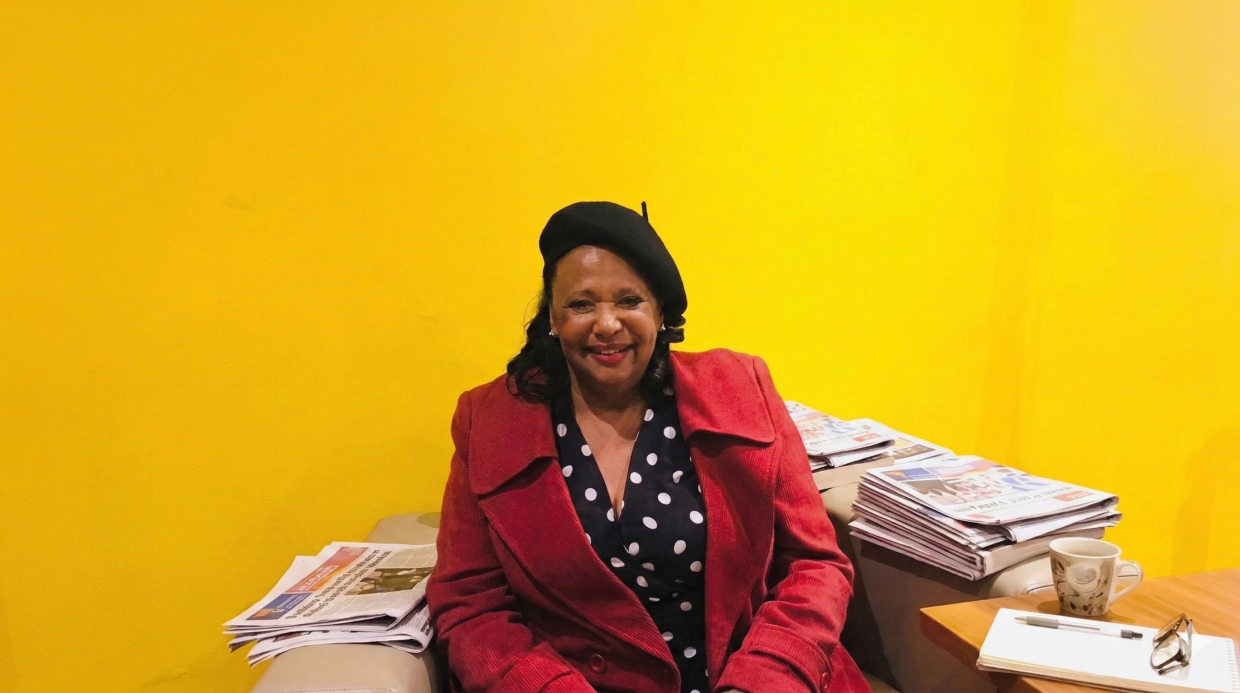
Carolina Maria de Jesus: the writer’s daughter remembers the story and impact of the Brazilian writer.
For many years, Carolina Maria de Jesus’s legacy continues to be one of the main chronicles of social inequality in Brazil. At the same time, the writer’s work is a cornerstone of Brazilian literature. A black woman, writer, single mother, and resident of the favela, Carolina transformed her very own experiences into social critique and historical memory, raising awareness of the routines, pain, and survival strategies of those who seldom occupy mainstream spaces. Her writing traverses generations, revealing, with candour and sensitivity, the strength of those who wrote to exist, resist, and affirm human dignity in a country that is deeply affected by structural inequalities.
It is from this legacy that the SETA Project interviewed Vera Eunice de Jesus, daughter of Carolina Maria de Jesus. The literature teacher carries the legacy of history that mobilizes readers, researchers, and cultural movements in the entire country.
The strength of Carolina’s story was celebrated by the samba school Unidos da Tijuca (Tijuca United) when they selected the writer as the narrative samba theme for Carnival 2026. The samba school brought to Marquês de Sapucaí the strength of a woman who narrated her life as political action and transformed her voice into Brazilian cultural patrimony.
Caroline Maria de Jesus, the writer’s daughter, participated in an interview with the SETA Project:
1: The work of Carolina Maria de Jesus shows that she was truly ahead of her time. How do you view your mother’s legacy today, especially for the younger generations?
As Audálio Dantas (the journalist who discovered Carolina Maria de Jesus) would say: “There has never been and will never be another CAROLINA MARIA DE JESUS in Brazil nor in the world.” For my mother, there was nothing in her favor because she was born just a few years after the abolition of slavery, and suffered from racism because of this historical milestone, which, as you know, was abolition ‘only in name’. She had always dreamed of being a writer and seeing her name in print. She chased her dreams and achieved them because she was daring. The new generation of Carolinas should also continue in her footsteps and fight for their ideas.
2: Do you think her work can be a powerful tool in schools to discuss racism and social inequality?
Certainly, because kids and teens love Carolina’s story. I have given many talks in schools, and I hear many stories much like hers. I always say that if Carolina were here today, she would write “Child of the Dark: The Diary of Caroline Maria de Jesus[1]” again because nothing has changed. Racism is latent, even when it is veiled. Social inequality continues in Brazil and the rest of the world.
3: As an educator, what is your assessment of Law 10,639’s implementation in Brazilian schools? How could teaching advance in this regard?
Schools have greatly progressed on racial issues because today, part of the black population knows both why and how to fight to combat racism. I notice more black empowerment thanks to the schools’ implementation of the knowledge, mainly due to the work of many educators. Carolina greatly appreciated education and teachers. She knew that she was only able to reach her goal of becoming a writer because of the year and a half she spent studying, despite not enjoying school. However, her teacher was adamant about her learning, making her study.
4: How do you feel your mother is being recognized as a literary and historical reference in Brazil? Did it take a while to really happen?
My mother had her heyday in the 1960s, despite all of the issues she faced at the time for being semi-illiterate, black, dark-skinned, a single mother with children by white foreign men, and a favela resident. She was a witty woman, and she clearly perceived that she was not accepted in society; however, she held her head up high in the midst of the setbacks she faced. On several occasions, we were kicked out of events because of our skin color. Later, when they found out that she was a writer, they would ask her to return. However, she would not change her mind. We left and did not come back.
We suffered a lot after my mother became famous; however, on the centennial of her passing, my mother’s name reemerged with great strength and continues to be more relevant than ever. When she passed, she left me a letter with many requests – one of which was never to allow her memory to die. Because of this, I have been working to elevate her to the heights where I believe she belongs.
5: What aspects of Carolina’s experience most highlight the urgency of education policies aimed at valuing the black population?
Perhaps if my mother were here today, her story would be seen through a different lens. She would have more opportunities to study – something she always wanted, to refine her knowledge. However, our struggles are still in their early stages because we face so much violence, and racism is still latent in our society. What we must do is fight to achieve our goals, as we now have more of a voice. My mother greatly contributed to black visibility, writing a book that revolutionized and continues to transform the world, showing everyone how the poor, those living in favelas, or rather, the underprivileged, struggle to find their place in the sun.
The theme samba of Unidos da Tijuca spotlighted Carolina as a writer who lived, created, and transformed, placing her voice and work at the center of the country’s cultural narrative.
6: How do you evaluate the parade? Were there any touching moments for you?
I had never expected that her story would be praised at The Sambadrome Marquês de Sapucaí[2]. It is a way for everyone to learn about the writer’s trajectory, especially teenagers and children who are the amplifiers of her legacy in the future. When I arrived at Sambadrome, my eyes became watery because I thought even more about my mother. I am sure that she would have been very moved. However, I thought I had to stay strong to honor her, through me, in the parade.
7: Your mother’s writing depicts, with strength and tenderness, the reality of the favelas. Do you believe that Unidos da Tijuca’s theme could help broaden this perspective within society?
Certainly! Because it is a theme that addresses everything we have experienced in the favela and what we continue to experience. It even takes on the discussion of women’s struggle to provide for their children. In addition to this, it tackles the issues of constant and prevalent violence, because some mothers are losing their children to violence almost daily. It also addresses hunger, which remains prevalent both in Brazil and in parts of the world. The theme is an outcry for politicians to see us.
8: Carnival is a powerful expression of Afro-Brazilian culture. How do you view this celebration as a tool for honoring black ancestry and memory?
Currently, we face a huge struggle to ensure that black memory and ancestry are uplifted. It is mainly we, Black people, who know the importance of this recognition. Carnival is a means of seeking justice for our ancestors’ suffering. I come from a family of enslaved people, and, even after the “so-called” abolition, I can say that my mother suffered deeply. She was born shortly after Black people were liberated. Due to her deeply dark skin color, she suffered greatly, especially in the city where she was born.