Postado em: 5 September, 2025
Climate Crisis in Brazil highlights the impact on the life of a student from Amazonas State
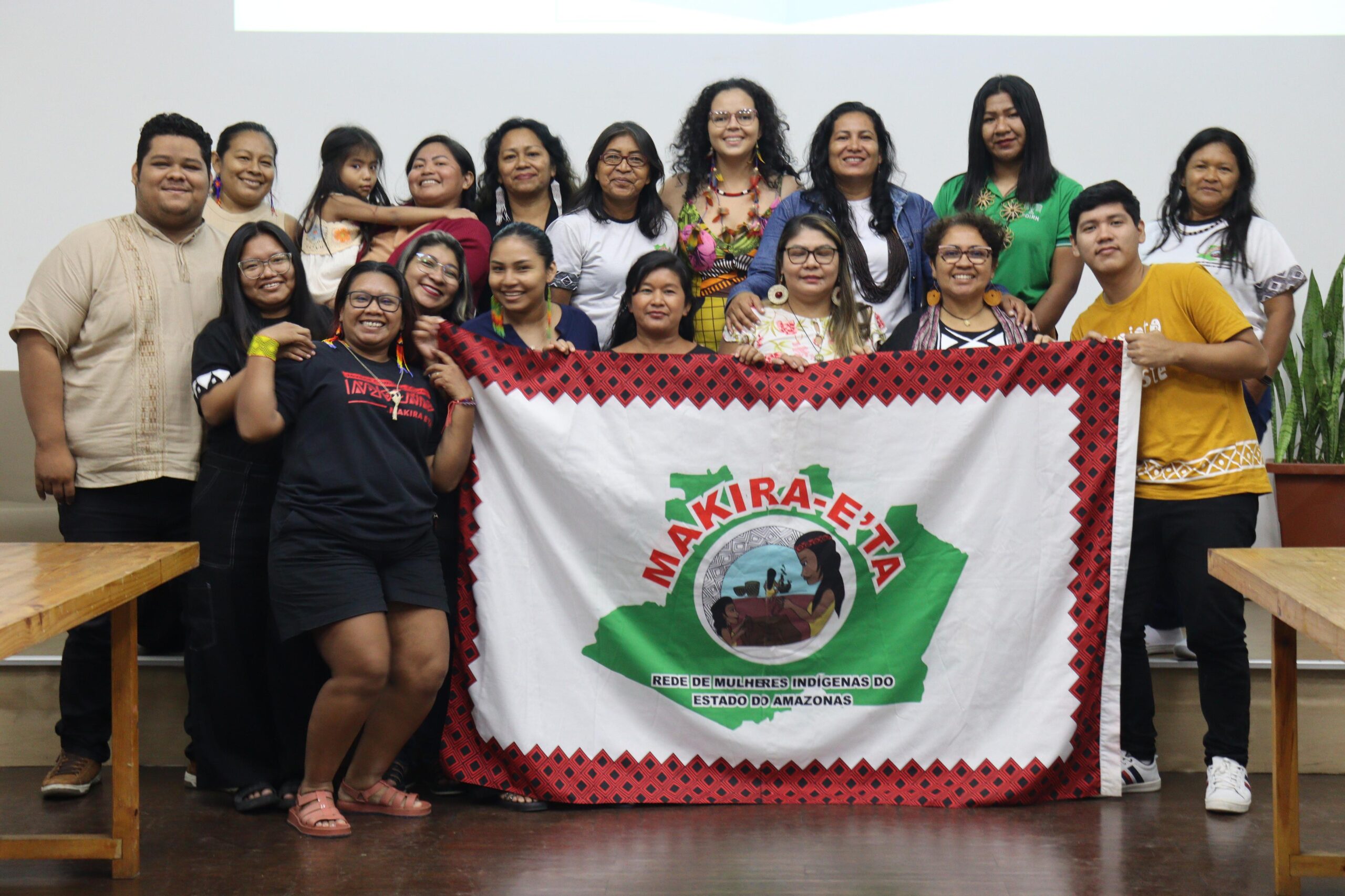
Students suffer from drought, excessive heat, and the difficulty of getting around in the region of the state of Amazonas (Image: press release/dissemination)
The goal of making the dream of Higher Education come true was the incentive that the young indigenous woman Leidiane Alfredo dos Santos, a fifth-semester student in Pedagogy, from the Federal University of Amazonas (UFAM) and resident of the Indigenous Community Tikuna Filadélfia, from the Alto Solimões territory, found to tackle the three-hour daily walk from her home to the UFAM. This was her route last year, when the Amazon region experienced the worst drought in its history.
“Due to the high temperature, the institution separated the lectures into two different lectures. With that change, I had to walk under the hot sun for over three hours, which made me arrive to class late”, the young woman stated. According to Leidiane, the students, residents who live far from the university, were in favor of suspending classes. However, it was a failed attempt. The institution continued its normal academic calendar. Due to the exhausting routine and the difficulties she experienced, the university student failed some of her classes. However, she continued to pursue her main objective in life.
“My biggest motivation is my family, and I ended up falling in love with pedagogy, rightfully so because I studied in an indigenous school where few teachers were specialized in the area”, she remarked.
Precariousness in the Schooling System in the Amazon
For Socorro Elias, Executive Coordinator of Makira E’ta, in the larger context of education in the Amazon, even outside the context of the drought, children, youth, and the indigenous people already have precarious schooling within their territories, and these adverse weather conditions worsen that reality and broaden its magnitude.
“The new generations are the ones who end up being affected the most. They will have to bear the heaviest burden of the climatic changes, which are increasingly worse. Today, these students walk kilometers to go to school, and when they arrive, they are tired and hungry”, Socorro states. The professional emphasizes that the problems experienced over many decades still do not have the impact that they deserve. “There is no concern because those who suffer the most are those at the most vulnerable strata of society. In the state capitals, for example, the students go to school on the bus, different from the riverside areas, where residents often commute using canoes”, she analyzes.
Júnior Aleixo, Program and Political Coordinator for ActionAid, highlights that these are the circumstances that have historically been seen in other regions of the country. “Thinking about the contexts of extreme drought, for example, the Brazilian semiarid region is undergoing a process that is uncertain regarding the possibility of reversing the effects on the biodiversity where desertification occurs”, states the specialist.
According to the professional, there is no possibility of combating climate change while there is a further widening of racial domination. Because of this, antiracist education must be directly integrated into ecological education, which debates what racism, social justice, and the environment are.
Aleixo argues that the situation in the coming years will get worse because the population is experiencing hardships that cannot be deferred any longer. “I believe that we have already postponed this discussion for far too long regarding climate change, and negating the reality mostly aids in corroborating the anti-scientific actions”, he concludes.
Indigenous Education in Brazil
The Brazilian Federal Constitution of 1988 guarantees the right to distinct, tailored, and bilingual education for the indigenous communities. However, there are still large challenges within Indigenous School Education. According to data from the 2023 School Census, of the 178,300 primary schools, only 3,541 are located in indigenous territories and apply specific and specialized content that is fitting to their ethno-cultural reality. The other 3,597 schools offer indigenous education through the schooling system.
Despite the legislation offering guidance, which ranges from how the school needs to be organized, how to make preliminary inquiries, to how to train educators and the role of the indigenous within the institutions, its compliance is seen as the main challenge. For Jonise Santos, professor at the Federal University of Amazonas State (UFAM) for over 25 years, one of the points that deserves to be highlighted in the process of truly and effectively establishing this teaching model is training.
“If there is no quality training or guidelines on rights or specific methodologies, the entire process will be misguided. With that said, the school, which should be an instrument of resistance and struggle, remains an instrument of integrating the national society”, says the educator, who is a part of Makira E’ta’s team of consultants.
All Lidiane’s lived experiences, especially the challenges she faced, have ignited in her a desire to become an educator and to contribute to children’s education. Her mother, the teacher who taught her Portuguese, played a crucial role in her upbringing. As a child, Lidiane primarily communicated in her native language and struggled learning Portuguese, which made her mother’s guidance invaluable. “In the future, when I graduate”, she states, “I want to collaborate with other children, especially Indigenous and bilingual students”.