Postado em: 7 May, 2026
Capoeira Initiative in Schools, in the state of Bahia, Promotes Afro-Brazilian Culture and Strengthens Antiracist Education
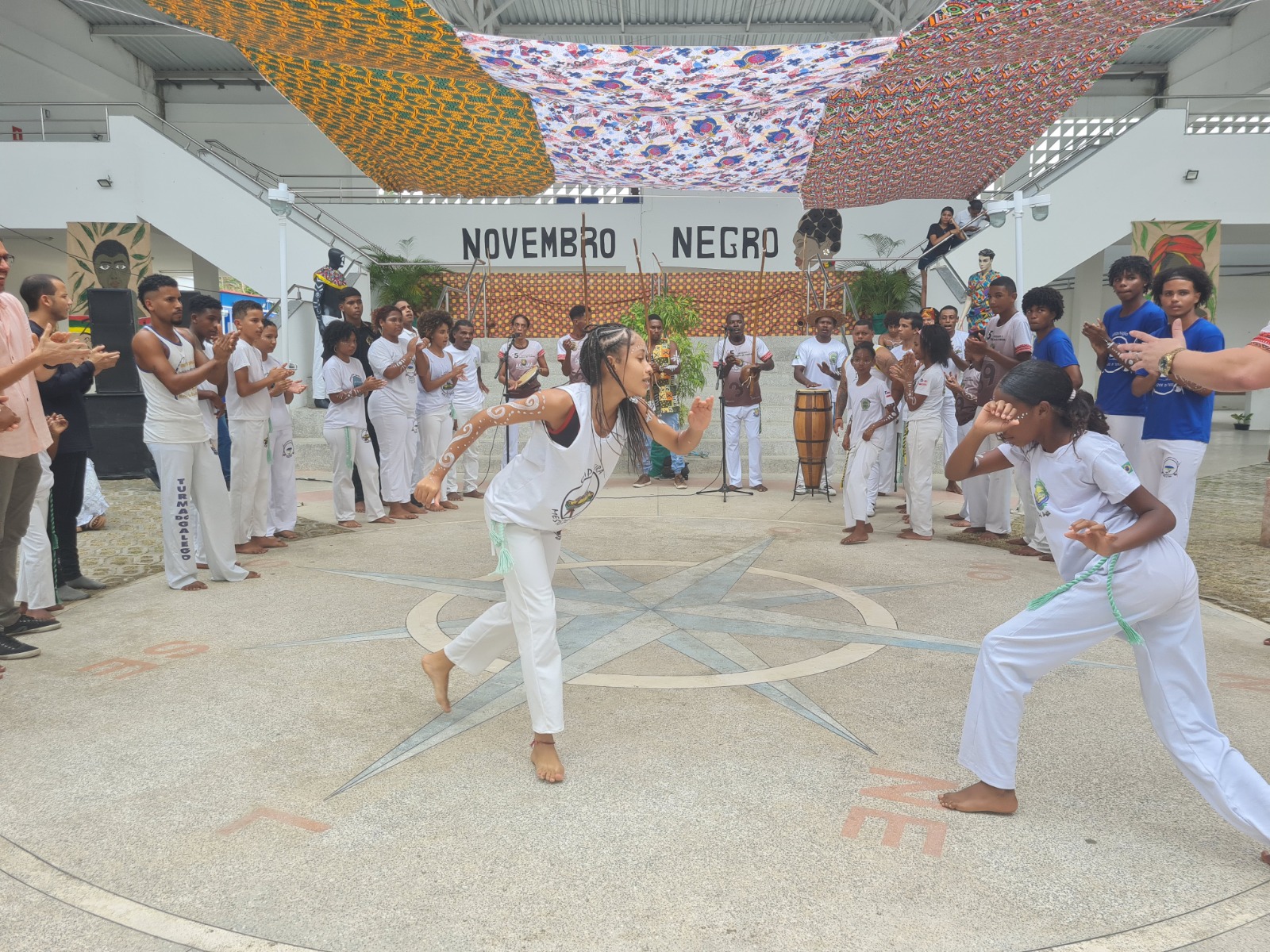
The initiative from the State Secretary of Education that includes the capoeira practice serves over nineteen thousand students.
The Bahia State Secretariat of Education (SEEDUC – BA) has taken another important step towards the valorization of Afro-Brazilian culture and the building of antiracist education. With “Project Capoeira for Schools: Movement, Identity, and Heritage”, SEEDUC – BA intends to implement capoeira as an educational workshop in schools within the state schooling network.
The initiative recognizes this practice as educational, cultural, and developmental, valuing its historical, cultural, and pedagogical roots as an expression of Afro-Brazilian culture. The project, which serves over 19 thousand students in the state school system, reinforces the implementation of Law 10.639/03, which made the inclusion of history and African and Afro-Brazilian culture obligatory in the educational curriculum for K-12 education.
“The inclusion of capoeira in schools significantly contributes to the recognition and the appreciation of Afro-Brazilian culture, by inserting it into the schools’ day-to-day activities, a cultural ancestral manifestation, which connects history, the body, oral tradition, musicality, and collective memory. In this project, capoeira is understood as an educational and cultural practice, officially recognized as cultural patrimony and an expression of knowledge of our black population, which makes up the Brazilian social structure”, states Carla Nogueira, Antiracist Education Coordinator, Ethno-Racial Relations and Diversity for SEEDUC – BA.
For Carla, when experiencing capoeira in schools, students have the opportunity to recognize and value the Afro-Brazilian foundations present in the cultural expression, and, therefore, strengthen their sense of belonging, recognition of black identities, and combat historical stigmas associated with cultures of the African diaspora.
“Capoeira is now being integrated into the school curriculum intentionally, aiding in the implementation of laws No. 10,639/2003 and No. 11,645/2008 and the building of pedagogic practices committed to antiracist education”, she emphasizes.
Capoeira has an impact on physical, emotional, and social development
Capoeira, when it connects to movement, rhythm, and history, plays an essential role in the comprehensive development of those who practice it. Concerning physical development, it contributes to motor coordination, balance, and body awareness. Emotionally, it stimulates self-confidence, concentration, and self-control, at the same time in which it teaches respect for others and the rules. Socially, it promotes collaboration, a sense of belonging, and the strengthening of identity, especially among black children, giving value to an Afro-Brazilian cultural expression of resistance and liberty.
“In the context of public schools, Project Capoeira for Schools continues to contribute to the improvement of the school environment, the culture of peace, to consolidate the bonds among students, the community, and the territory, and to build educational environments that are more inclusive, welcoming, and committed to civic engagement and antiracist training”, reinforces Carla Nogueira.
The SEC Ordinance No. 1,381/2024 established Project Capoeira for Schools and is supported by the State Law No. 14,342/2021 (Law Moa do Katendê), via the Decree No. 23, 204/2024, which both provide a safeguard and incentive for capoeira in the state of Bahia, and is directly linked to the Federal Laws No. 10,639/2003 and No. 11,645/2008, which involve the mandatory teaching of Afro-Brazilian and Indigenous history and cultures in schools.
The Antiracist Education Coordination team, Ethnic-Racial Relations and Diversity (CEARD) of SEEDUC Bahia is made up of the members: Manuela Veríssimo Santana, Caroline de Jesus Souza, Neuber Leite Costa, Adarlene Santos Silva, and Larissa Ferreira Gonçalves.