Postado em: 19 May, 2026
With Project SETA’s support, students participate in their first exchange program in the United States
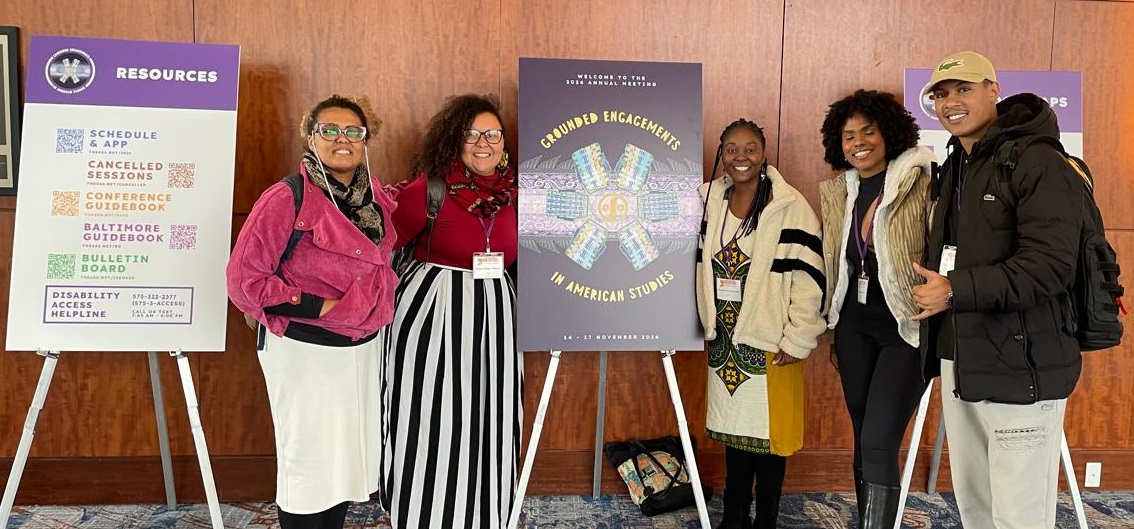
With the Program Abdias do Nascimento, which was supported by the SETA Project, students participated in the exchange program at the University of Maryland.
The year 2025 marked the first edition of the Academic Program Abdias Nascimento, an exchange program that gathered 14 visiting research scholars to spend a semester of their Master’s or Ph.D. at the University of Maryland, in Baltimore, in the United States. The initiative was supported by the SETA Project.
The course was intended to serve students who are: black, mixed-race, indigenous, quilombola – residents of quilombos or maroon communities, from rural communities, as well as students with disabilities, who are enrolled in post-graduate programs at the State University of Campinas (UniCamp), the University of São Paulo (USP), and the Federal University of Bahia (UFBA).
The fruit of those who paved the way
According to Elizabeth Alves, a doctoral candidate in Education at UniCamp, one of the program’s awardees, having access to this opportunity means recognizing herself as the fruit of those who paved the way for black people who began this journey before her.
“Walking through the university and noticing so many black students was deeply moving. Beyond that, seeing women like me in high-level positions, such as the University President, and getting to know the Historical Black Universities was also really important”, Elizabeth comments.
For André Pimentel, a PhD candidate in Anthropology at UniCamp, the program is significant because it tackles a delicate topic: making international exchange more democratic and accessible.
“It is something that is even more requested for those who wish to follow the career path as researchers; however, there are usually challenges in accessing it, especially for black students, people from low-income backgrounds, and beneficiaries of affirmative action programs”, she emphasizes.
The program Abdias do Nascimento is an initiative from the Ministry of Education (MEC) and the Coordination for the Improvement of Higher-Education Personnel (CAPES). The program’s objective is to foster racial equality, combat racism, and uplift Afro-Brazilian and Indigenous culture, in addition to advancing research development in these areas.