Marcelo Perilo, specialist in Monitoring and Evaluation from the SETA Project, tells us his experience in INEP’s confidentiality rooms

Read more

Ancestral Identity and Resistance: Learn more about Indigenous Tattoo Symbols

Read more

Communication as a Tool in Antiracist Struggles

Read more

Latests news

04/Sep/2025

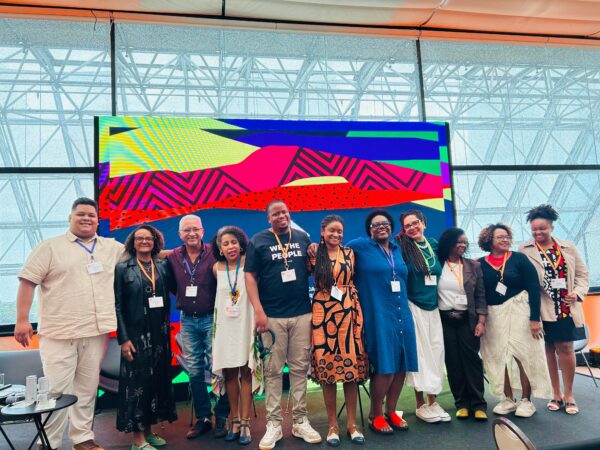
Gender, Race, and Education are themes discussed at the Conference “Learning Experience on Racial Equity 2030”

The event program had powerful discussions on the future of education and sharing experiences among…

Read more

04/Sep/2025

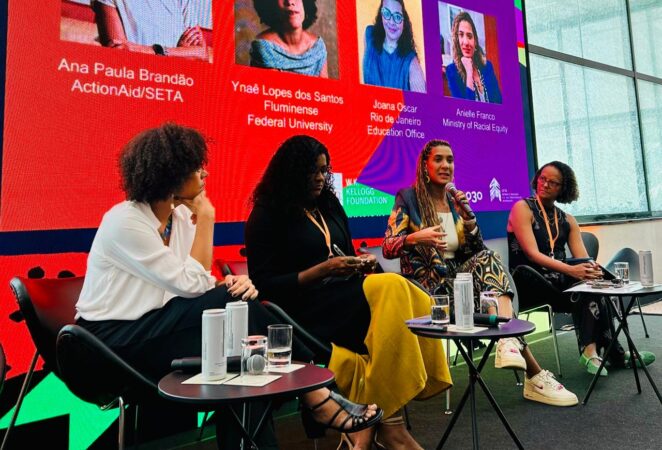
Conference “Learning Experience on Racial Equity 2030” hosts Anielle Franco, Ynaê Lopes, and Joana Oscar

The event, promoted by the Kellogg Foundation in partnership with the SETA Project, features…

Read more

03/Sep/2025

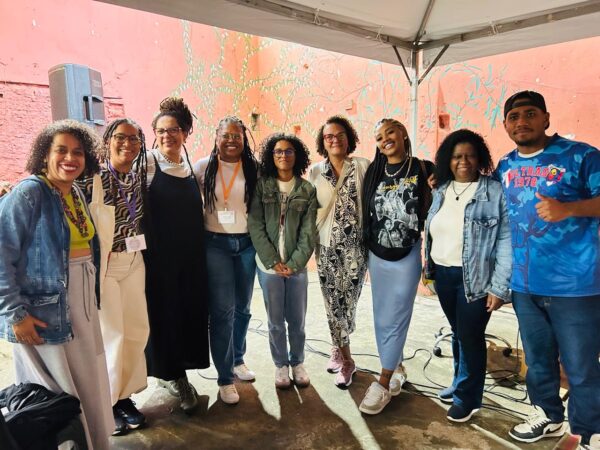
Meeting the youth leadership marks the second day of the “Learning Experience on Racial Equity 2030.”

At the Ocupação 9 de Julho (July 9th Occupation), a building occupation of MSTC (a movement that…

Read more

27/Aug/2025

What saved me was the strength I received from the black movement” – SETA Project interviews Deputy Dandara Tonantzin

In an exclusive interview, the Parliament member speaks on her work in the area of…

Read more

FAQ

We have put together the answers to your main questions into categories. Just click on the subject you are looking for to filter the questions already answered.

Structural racism in Brazil has systemically hindered access to the right to equal and quality public education by black, quilombola and indigenous students. The quality of education that children receive in Brazil is deeply segmented by racial and socioeconomic status. And, today, it is identified that the gaps between white children and black, quilombola and indigenous children, in all basic education indicators, are persistent and more serious for young people aged 11 to 17. Black, quilombola and indigenous children and young people are the most likely to drop out of school, have higher exclusion rates and have lower educational levels. Therefore, they are assigned the less prestigious and lower-paying jobs as adults. Meanwhile, white students internalize the racial inequities they are exposed to in schools and replicate them as adults. When looking at learning indicators, it is also concluded that there are not only more barriers to accessing school for black, quilombola and indigenous children, but that once at school, these children are less likely to access quality education.

The SETA Project seeks to carry out transformative actions based on evidence resulting from studies that help to understand the complexity of racial relations in the country and the resulting problems that need to be faced. In this sense, it foresees a series of studies with national and regional perspectives in its territories of intervention, especially in Amazonas, Maranhão, Rio de Janeiro and São Paulo. The objective is to map the perception of society in general, of education professionals and students about racism, racial inequalities in general and in education, the effectiveness of policies to combat racism, the gaps in tools and methodologies to promote racial equity and successful strategies and good national and international practices that can inspire actions to value diversity and differences and mitigate inequalities, especially in the area of education.

1) Biannual public mapping survey on perceptions of racism in Brazilian society.
2) Biannual focus groups on school communities’ perceptions of racism.
3) Monitoring and evaluation of educational indicators with analysis of education indicators focusing on race, gender and territory.
4) Studies led by the organizations that make up the SETA Project on “indigenous school education”, “quilombola school education”, “educational trajectory of black girls”, “black youth, education and violence”, “impact of secondary education reform on deepening of educational inequalities” and “participatory construction of indicators and diagnosis on quality in education and racial relations”.
All of these productions are/will be made publicly available to assist society in the construction of qualified narratives, based on the portrait of reality, in defense of racial equity in education, in addition to guiding project actions.

THE SETA PROJECT – EDUCATION SYSTEM FOR AN ANTI-RACIST TRANSFORMATION IS A PROJECT SUPPORTED BY THE W. K. KELLOGG FOUNDATION, SINCE 2021, WHICH BRINGS TOGETHER NATIONAL AND INTERNATIONAL ORGANIZATIONS ACTING TOGETHER FOR AN ANTI-RACIST AND QUALITY PUBLIC EDUCATION.