Postado em: 7 May, 2026
SETA Project interviews Kimberly de Souza, the young woman behind the Abayomi Doll workshops
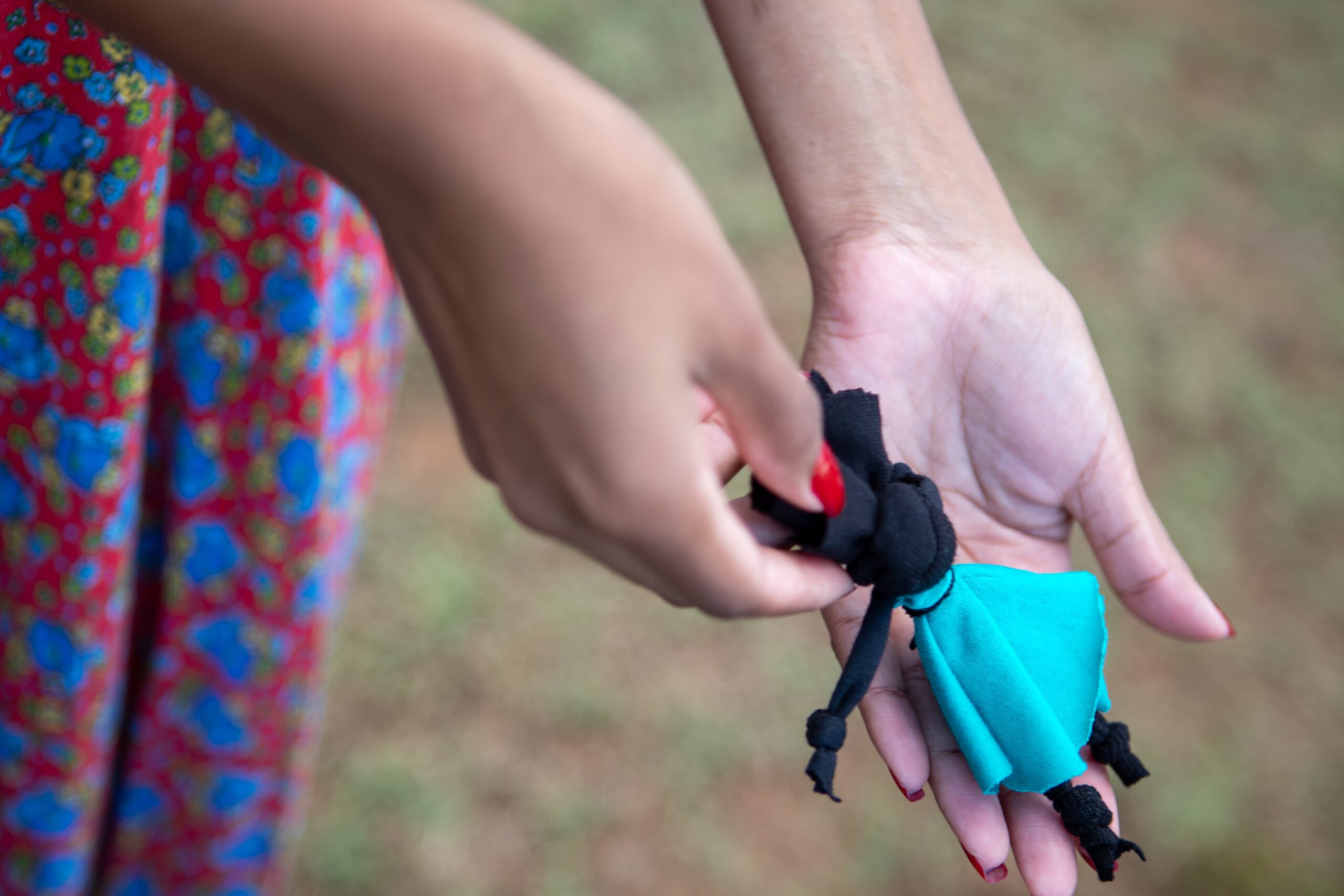
Abayomi dolls promote self-esteem and appreciation for black identity.
In the 1980s, the craftswoman Lena Martins created the dolls, intending to foster self-esteem and appreciation for the black identity. The Abayomi dolls are handmade from black fabric offcuts and are not sewn. However, they are not only simple toys, but rather powerful pedagogical instruments used in schools and social projects to promote antiracist education and stimulate ethno-racial pride.
In an interview with the SETA Project, Kimberly de Souza, a resident of the Cafundó Quilombo, located in Salto de Pirapora, a municipality approximately 121 km away from the capital São Paulo, spoke on the symbol’s relevance in history, culture, and belonging.
The 19-year-old young woman spearheaded the administration of the doll-making workshop during the conference, “Learning Experience on Racial Equity 2030”, promoted by the W. K. Kellogg Foundation, in partnership with the SETA Project, last May. Check it out!
1. The Abayomi were created by the artisan Lena Martins in the 1980s to promote self-esteem and the appreciation of black identity. What are your opinions of this initiative? Do you think these dolls convey those messages, especially to the younger generations?
The initiative was extremely important because the message came across clearly. The majority of the youth who come to the Quilombo already have this outlook, one that values black identity. They arrived with the knowledge after having already researched the doll’s history before their visit.
2. Do you have any training to be an instructor for this workshop? What was it that sparked your interest?
I don’t have any formal training, but the fact that it is a black doll and these dolls are a part of my heritage really grabbed my attention. With that said, I was curious to learn more and, with time, I have been honing my skills.
3. What are your thoughts on the Abayomi doll workshop? Do you find that the participants are very curious? Are they more interested in the workshop itself or the symbolic meaning the dolls carry?
There was high demand for the workshop. Most participants asked questions and interacted. Some sought out the workshop and found themselves drawn in by its story, while others knew a little about its history and wanted to learn how to make the doll. There were even others who had never seen one before…. But at the end of the day, everyone takes a little bit of the meaning back home with them.”
4. In your opinion, how important is it that your community offers these workshops to visitors and, in doing so, celebrates Afro-Brazilian culture?
The most important aspect of the work is not allowing our culture to die and never forgetting what our ancestors went through so that we can be here today. For this reason, seeing people appreciating history and becoming curious about it is very gratifying.
5. When and why did the idea arise of putting the Abayomi doll workshop onto the Quilombo’s agenda of activities?
When we had learned about the story of the dolls and understood their relevance. We then decided to hold workshops in the Quilombo because it is a part of our history, and it represents who we are.